Innovating at Cloud speed in the Benelux
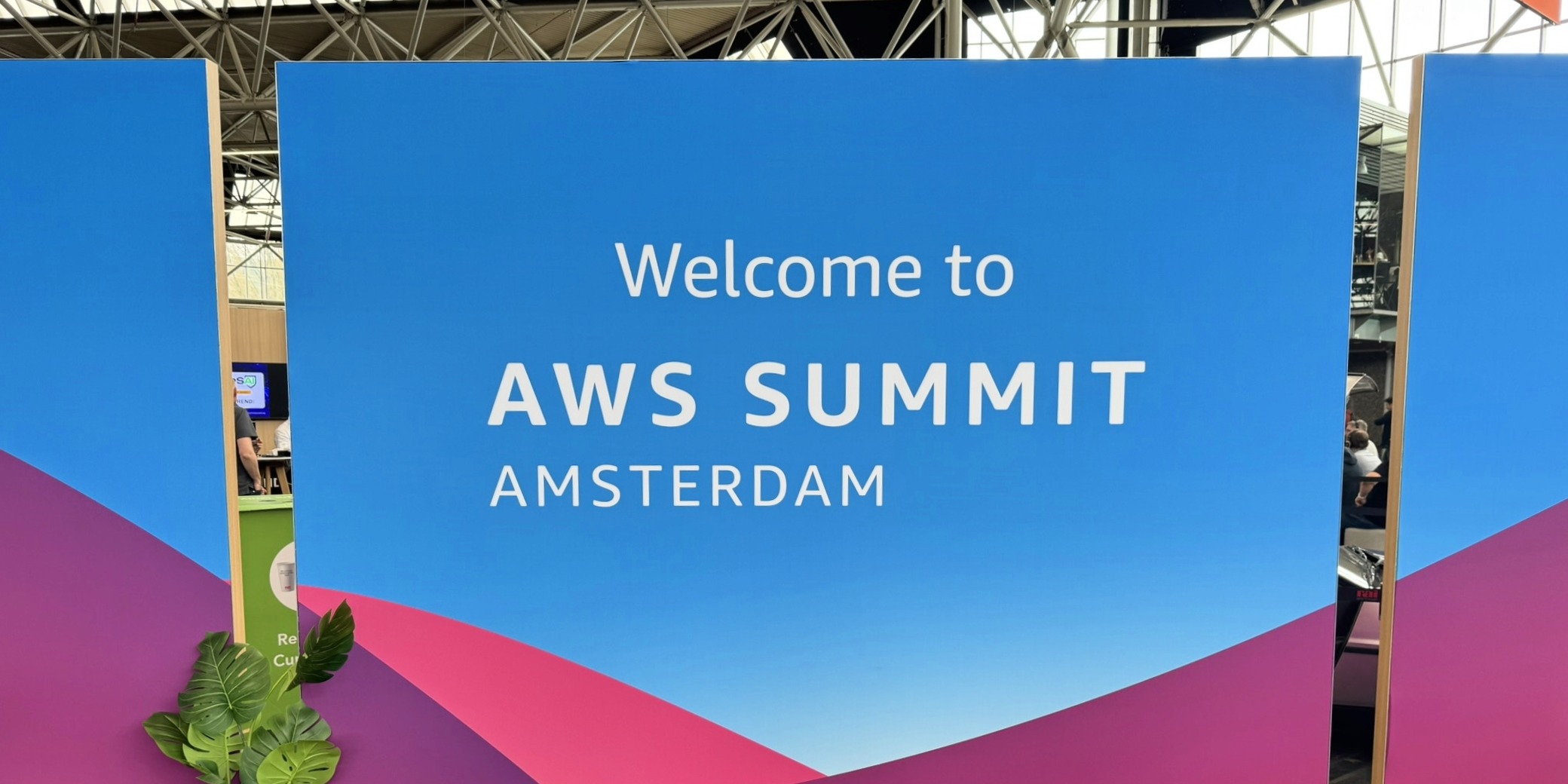
On April 16th of 2025, cloud professionals from across the Benelux gathered at RAI Amsterdam for AWS Summit Amsterdam 2025, a vibrant event packed with sessions and networking. As a first-time attendee, I’ll share highlights from the Keynote, Workshops, and the overall atmosphere.
Table of Contents
- Keynote
- Best Practices for Serverless Developers
- Building a Personal AI Assistant
- Overall atmosphere and conclusion
Keynote
Speakers: Danielle Gorlick, Andy Warfield

Danielle Gorlick, General Manager of AWS Benelux, welcomes the audience to the AWS Summit Amsterdam, emphasizing the importance of cloud, data, AI, and networking opportunities.
She highlights the variety of sessions available. She discusses the accelerating pace of change in technology and geopolitics, stressing the need for security and innovation. Gorlick mentions AWS’s commitment to Europe, noting significant investments in infrastructure and talent development, including the creation of the European Sovereign Cloud. She shares statistics on AI adoption and its impact on the Benelux region, such as revenue gains and efficiency improvements in various industries.
Throughout the keynote, she discusses significant investment and advancements in Europe, particularly focusing on the Benelux region and EU’s digital future. Here are some key points related to AI adoption in the Benelux, and the EU sovereign cloud
Investment in Europe
AWS’s commitment to Europe was another key highlight. Since 2010, AWS has invested €250 billion into the EU, with significant infrastructure investments across the continent. These investments include large capital projects for data centers and edge locations in cities like Amsterdam and Brussels. AWS’s presence in Europe is substantial, employing 250 thousand people, including 11 thousand in the Netherlands alone.
European Sovereign Cloud
Last year, AWS announced its plans for the European Sovereign Cloud with a strong focus on operational autonomy, data residency, and regulatory alignment within the European Union. Later that year, AWS formally presented and launched this initiative, marking a concrete step from vision to execution.
The European Sovereign Cloud is operated by a dedicated European organization, governed under EU law, and staffed exclusively by EU residents. It is designed to ensure that customer data and operations remain within the EU, while still providing access to a broad portfolio of AWS services. This approach allows public sector bodies and highly regulated industries to adopt cloud technologies without compromising on sovereignty, compliance, or security requirements.
By offering a sovereign cloud as a distinct option alongside its existing regions, AWS reinforces its long-term commitment to Europe’s digital future and gives customers greater choice in how and where they run their workloads.
As a sidenote, AWS’s initiative aligns with a broader market trend: other hyperscalers, such as Microsoft, have introduced sovereign or “national cloud” offerings, while European-led efforts like GAIA-X aim to define common standards and principles for interoperable and sovereign cloud ecosystems.
AI Adoption in Benelux
The Benelux region is leading Europe’s digital transformation, with 49% of Dutch businesses and 52% of Belgian businesses adopting AI technologies. These businesses are reporting significant revenue gains, with Dutch businesses seeing a 27% increase and Belgian businesses a 29% increase on average. The region is well-positioned to meet the EU’s goal of having 75% of businesses adopt AI by 2030, which could unlock 440 billion euros into the EU GDP by 2030.
Towards the end of the keynote, Andy Warfield, VP and distinguished engineer at AWS, is welcomed to the stage. Andy kicked off his talk by sharing a humorous strategy to combat jet lag.
AWS’s Building Blocks
One of the most exciting aspects of Andy’s presentation was the emphasis on the building blocks that AWS provides. These building blocks are designed to do a single job exceptionally well and can be easily combined to create complex and innovative solutions.
Andy highlighted the importance of security as a fundamental aspect of these building blocks, ensuring that no one - not even AWS - can access your data without your authorization.
Global Network and Compute
AWS’s global backbone, with over six million kilometers of fiber optic cabling, was another key point of Andy’s talk. This extensive network ensures low latency data transfer and supports the diverse compute options available, such as virtual servers, containers, and functions. Andy showcased how EC2 has over 850 instance types, making it possible to access the ideal compute for any workload, from mission-critical enterprise applications to scientific modeling and ML inference.
Accelerated Computing and AI
The rise of (generative) AI has led to an explosion in the popularity of accelerated computing instances, particularly those featuring NVIDIA GPUs. AWS’s 14-year partnership with NVIDIA has resulted in new instance types like the P6 family, which are now available in 2026.
Andy also mentioned how NVIDIA chose AWS for their own large Gen AI cluster underscoring AWS’s leadership in this space.
Graviton and Sustainability
AWS’s custom CPU, Graviton, was introduced in 2018 and has since evolved in the fourth generation. Graviton 4 offers up to 45% faster performance for large Java applications and 60% less energy consumption compared to Graviton 3.
Over the last two years, AWS has deployed more Graviton-based CPUs in their data centers than any other CPU type, showcasing the momentum behind this innovation
Storage and S3
Storage was another critical building block discussed, with a focus on Amazon S3, S3 now holds over 400 trillion objects as of 2025, ranging from images and videos to application logs and ML models.
Andy highlighted how S3 has evolved to store structured data, such as Parquet files, and introduced table buckets, which add a first-class table abstraction to S3, making it easier to manage and query structured data.
Metadata and SageMaker
The importance of metadata in enriching data was also emphasized during Andy’s talk. With the introduction of S3 metadata, which enables automatic generation of system metadata and easy querying with SQL.
Andy also introduced the next generation of Amazon SageMaker, a unified experience that brings data, analytics, and AI teams together, reducing time to value and enabling seamless collaboration across different tools and environments.
Closing Thoughts
Andy’s presentation at the AWS Summit Amsterdam was a testament to the power of AWS’s building blocks in driving innovation and scale. From compute and storage to metadata and unified workflows, AWS continues to push the boundaries of what’s possible, empowering developers to build remarkable solutions that can change the world.
Best Practices for Serverless Developers
Speakers: Gunnar Grosch, Yan Cui

Welcome to the world of serverless development, where innovation meets scalability without the weight of managing infrastructure. During a vibrant and insightful session at AWS, Gunnar Grosch (Developer Advocate at AWS) and Yan Cui (AWS Serverless Hero and Independent Consultant) shared their extensive experience working with serverless technologies. Both speakers have been deeply involved in the serverless ecosystem since its early days.
This session is crafted for both newcomers and seasoned developers looking to elevate their serverless practices, covering a range of topics from the evolution of serverless technologies to practical implementation strategies. The speakers emphasized the importance of serverless in today’s competitive market, highlighting its ability to iterate quickly and deliver value to customers faster. They also discussed the continuous improvements in services like AWS Lambda and EventBridge, which have made serverless architectures more efficient and cost-effective over time.
The Evolution of Serverless
The evolution of serverless, as discussed during the talk, has transformed from its inception in 2006 with services like Amazon S3 and Amazon SQS to a more comprehensive architectural paradigm with the introduction of AWS Lambda in 2014.
AWS Lambda allows developers to run code without managing servers, and it has been joined by a suite of other serverless services that collectively manage compute, storage, messaging, and orchestration.
Key AWS Services in Serverless
- AWS Lambda: Enables running code in response to events without the need to provision or manage servers.
- Amazon API Gateway: Facilitates the creation and management of RESTful APIs for serverless backends.
- Amazon DynamoDB: Provides a serverless NoSQL database with low latency.
- Amazon EventBridge: Acts as an event bus that connects applications using data from various sources, including your own applications, SaaS applications, and AWS services.
- AWS Step Functions: Coordinates components of distributed applications as workflows, simplifying the orchestration of complex processes.
Best Practices from the Experts
1. Think in Events, Not Servers
Traditional developers often focus on how long a process takes or which server runs it. But in serverless, the focus shifts to what happened, not where it happens.
“If something happens—like a file upload or a user signup—you react to it.” – Yan Cui
2. Embrace Granularity
Don’t cram multiple concerns into one Lambda. Make your functions small, focused, and single-purpose. This results in things such as easier testing, better observability, and faster deployments.
3. Design for Failure and Retry
Failures happen. Services like Lambda and Step Functions offer built-in retries and error handling. Design your systems to be resilient and idempotent—so that they can be retried safely without unintended side effects.
4. Keep Cold Starts in Mind (but Don’t Overoptimize)
A Lambda cold start happens when AWS initializes a new execution environment for your function, typically during the first invocation or after inactivity. This process, which includes provisioning resources and loading your code, can cause slight latency, especially in synchronous workflows or with heavier runtimes like Java or .NET.
Cold starts—where a new instance of a Lambda function is spun up—can introduce slight latency. Focus first on correctness and simplicity.
If cold starts become a bottleneck:
- Use provisioned concurrency
- Keep deployment packages minimal
- Consider using SnapStart to reduce initialization times
5. Know Your Limits (Literally)
Every AWS service has limits: Lambda has memory and timeout constraints; API Gateway has rate limits. Understand these early.
Useful tools:
- AWS Service Quotas
- CloudWatch Alarms
- AWS X-Ray for tracing
6. Infrastructure as Code (IaC) is a Must
Use Infrastructure as Code (IaC) tools like AWS CloudFormation, AWS CDK (Cloud Development Kit), or Serverless Framework to define and version your infrastructure. These tools make your architecture repeatable and easy to manage across environments. Additionally, the talk emphasized the importance of:
- Using managed services and features wherever possible to reduce undifferentiated heavy lifting.
- Implementing observability through structured logging, metrics, and tracing.
- Securing your application by avoiding logging PII, configuring security settings through IaC, enabling encryption, and blocking public access.
- Governance and compliance through tools like AWS Config, Control Tower, and organization SCPs.
These points further reinforce the best practices for building robust and efficient serverless applications.
The Real Power of Serverless: Speed and Focus
The biggest takeaway from Gunnar and Yan is that serverless technology is primarily about the speed of delivery. It allows developers to focus on business logic and user experience without being encumbered by operational overhead.
Whether you are building a global-scale web application, an AI-powered chatbot, or a weekend side project, serverless enables you to move from concept to production with remarkable speed and efficiency.
Gunnar’s Final Thought
The final thought from Gunnar underscores that serverless technologies are making it easier for developers to build world-class applications without needing deep infrastructure expertise. The presentation encourages developers to adopt these best practices to create scalable, resilient, and simple applications.
Personal Reflection
This serverless best practices session was truly inspiring and reinforced my belief in the transformative power of serverless architecture. Hearing from industry experts like Gunnar and Yan provided invaluable insights.
I’m excited to experiment more with serverless technologies, particularly exploring how services like Lambda, EventBridge, and Step Functions can work together to create elegant, event-driven architectures. The combination of rapid development cycles and automatic scaling makes serverless an compelling choice for both side projects and production applications.
Building a Personal AI Assistant
Speakers: Gunnar Grosch, Anisha Malde

The demo showcased a full-stack AI chatbot app that lets users take photos and ask context-specific questions—like " What’s the weather there?"—with responses powered by Amazon Bedrock and external APIs.
Tech Stack

The tech stack includes a React Native (Expo) frontend with PaperProvider (Material Design components for React Native) and AsyncStorage (persistent key-value storage for user data), and an AWS SAM backend. AI services are provided by Amazon Bedrock, supporting both text and image models. Voice input is handled using Expo speech recognition, while DynamoDB is used for storing user context and preferences. The app also integrates tools like Weather APIs, a camera, AWS Polly - a managed text-to-speech service - for voice, and more.
The architecture connects the user’s device to a serverless backend with Cognito for authentication, which then interacts with Amazon Bedrock’s multimodal LLM.
Considerations
Key considerations include prompt tuning at both system and task-specific levels, using AppConfig for dynamic configuration, and optimizing for latency, edge cases, and voice recognition. Additional important considerations for building a Personal AI Assistant include:
- Edge Cases in User Inputs
- Handling unexpected inputs, like partial or unclear commands
- Latency Issues
- Ensuring real-time responsiveness, especially with cloud-based AI processing
- Resource Constraints
- Optimizing AI models for devices with limited processing power
- Voice to Text Considerations
- Limited to native device capability or extra call to Amazon Transcribe
Final Thoughts
This session on building a Personal AI Assistant was genuinely inspiring and opened my eyes to the practical possibilities of combining serverless architecture with modern AI capabilities. The demonstration of a full-stack AI chatbot that can process both text and images, integrate with external APIs, and provide contextual responses showcased how accessible these technologies have become.
What particularly excited me was seeing how AWS services like Bedrock, Lambda, and DynamoDB can work together seamlessly to create intelligent, responsive applications. The multimodal capabilities represent a significant leap forward in user experience design.
I’m planning to experiment more with AI assistants in the coming period and will likely write a detailed blog post about my experiences building one from scratch. One particularly intriguing possibility I’m considering is integrating an AI assistant with physical robotics. The Reachy Mini robot from Pollen Robotics caught my attention as an interesting platform that could serve as a physical embodiment of a personal AI assistant, combining the serverless backend architecture demonstrated in this talk with tangible, interactive robotics.
The future of personal AI assistants is clearly moving beyond simple chatbots toward more contextual, multimodal, and physically interactive experiences. This session provided an excellent foundation for understanding how to build these systems using modern cloud technologies.
Overall Atmosphere and Conclusion
AWS Summit Amsterdam 2025 was an overall fun and highly educational experience that exceeded my expectations as a first-time attendee. Beyond the excellent keynote and technical sessions, the event offered a rich ecosystem of learning opportunities and interactive experiences.
The breakout sessions were particularly valuable, featuring self-paced hands-on labs that allowed me to dive deep into AWS services at my own rhythm. These practical workshops provided the perfect complement to the theoretical knowledge shared in the main presentations, giving me the chance to experiment with technologies like serverless architectures and AI services in a guided environment.
What made the event truly special were the diverse activities and showcases scattered throughout the venue. The hologram huddle demonstration was fascinating glimpse into the future of remote meetings that felt straight out of science fiction. These innovative showcases highlighted how cloud technologies are pushing the boundaries of what’s possible in business communication and collaboration.

The expert booths were another highlight, providing invaluable opportunities to engage directly with AWS specialists. Being able to discuss real-world challenges and get personalized advice on development approaches was incredibly beneficial. These conversations often provided insights that you simply can’t get from documentation or online resources.
The networking opportunities, combined with the vibrant atmosphere at RAI Amsterdam, created an environment where learning felt natural and enjoyable. As someone new to AWS events, I was impressed by the community spirit and the willingness of both AWS staff and fellow attendees to share knowledge and experiences.
This summit reinforced my enthusiasm for cloud technologies and provided concrete next steps for my own development journey. I’m already looking forward to applying what I learned and potentially attending future AWS events to continue this learning adventure.
